A Conversation About the Kingdom, Judgment, and the Cost of Teaching Lawlessness Years ago, a friend told me,“It’s fine if people teach Jesus but not the Law. They’re still in the Kingdom.” It was a comforting thought to him—almost like a spiritual safety net. But what if that comfort comes from misunderstanding what the Kingdom… Continue reading “Least in the Kingdom”: A Warning We’ve Softened
Tag: bible
Did Yeshua Really Abolish the Torah?
A Conversation from the Mount, the Mission, and the Modern Ancient Belief Shalom, y’all! It’s been a minute (or a few lifetimes, depending on how you measure time), but I haven’t forgotten you—and I haven’t abandoned you either. I missed you, and I’m thrilled you’re back. We’re picking up right where we left off in… Continue reading Did Yeshua Really Abolish the Torah?
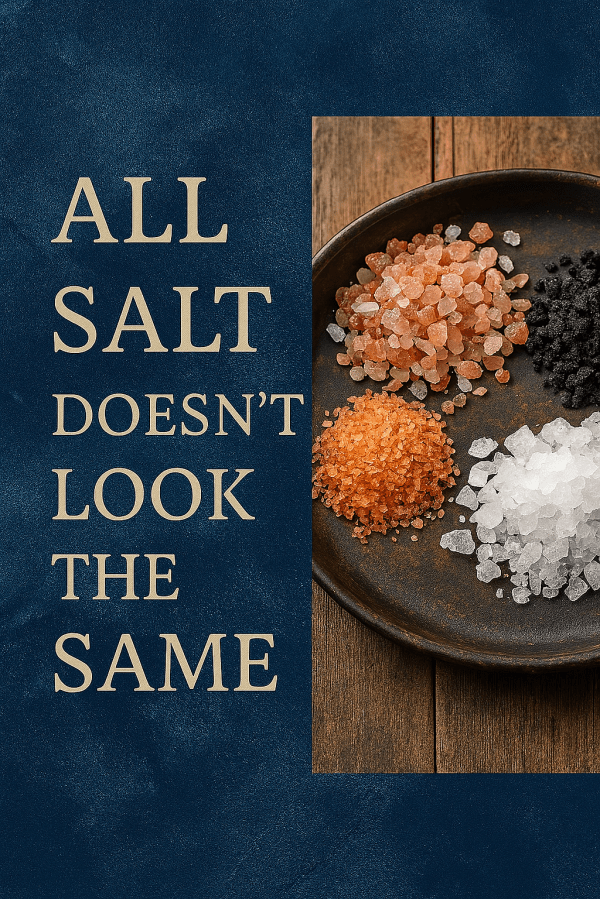
“Salted for a Purpose”: A Reflection on Covenant, Offerings, and Influence
This blog explores the rich biblical symbolism of salt, tracing its role from Leviticus 2:13’s covenantal offerings to Yeshua’s call to be “the salt of the earth” in Matthew 5:13. It highlights how salt represents purity, preservation, and enduring faithfulness—both in ancient worship and modern spiritual practice. Through a conversational lens, readers are invited to reflect on how their lives can embody covenant loyalty and moral clarity in a world that desperately needs flavor and truth.
Rejoice in Persecution
Matthew 5:11–12, where Yeshua calls His followers to rejoice in persecution as the prophets did before them. From Isaiah to Jeremiah, the faithful suffered for truth yet shared in God’s eternal reward. This study reminds believers that persecution is not the end of faithfulness — it’s the evidence of belonging to the Kingdom of Heaven.
Makers of Shalom: Becoming the Children of Elohim
In this reflection on Matthew 5:9, we explore what “Blessed are the peacemakers” really meant to Yeshua’s first listeners — Torah-keeping Jews under Roman rule. From a Karaite Messianic view, true peace (shalom) isn’t about avoiding conflict but restoring what’s broken through obedience, forgiveness, and truth. Learn how to live as a child of Elohim by becoming a restorer of shalom in your world.
Mercy Matters
When you think of mercy, what comes to mind? Maybe letting someone off the hook when they’ve wronged you. Or maybe it’s the feeling of compassion when you see someone struggling. Those are part of it, but in Scripture, mercy is not just an emotion—it’s action.
Blessed Are Those Who Mourn:
Matthew 5:4 as Sacred Protest and Comfort “Blessed are those who mourn, for they shall be comforted.” — Matthew 5:4 According to Merriam-Webster, beatitude is a state of utter bliss. But at a glance this bliss is hidden beneath deep pain and bone crushing weights. On the Mount Yeshua continued his message of hope in… Continue reading Blessed Are Those Who Mourn:

“Blessed Are the Poor in Spirit”: A Biblical Reflection
In Matthew 5:3, Yeshua opens his Sermon on the Mount with a paradox: “Blessed are the poor in spirit, for theirs is the kingdom of heaven.” From a perspective—grounded in the Hebrew Bible—this verse invites a return to the raw, unmediated voice of Scripture. It’s not about spiritual poverty as weakness, but about humility as… Continue reading “Blessed Are the Poor in Spirit”: A Biblical Reflection

The Beatitudes: Through a Jewish Lens
Many people view Yeshua’s teaching on the Mount as the opening monologue to the Christian manifesto or the Foundation of Christian ethics. They consider the teaching to be so profound that they are revolutionary. But what if you were in Israel, hearing the words coming from the Rabbi’s mouth? What if you had grown up… Continue reading The Beatitudes: Through a Jewish Lens

Protecting the Gift
The breath gifted to us by God now carries the stench of our own corruption. The waters—once pure for drinking, bathing, and nourishing the soil—run with toxins. Even the food meant to sustain life is laced with poison. We have defiled not only the earth beneath us, but the heavens above: debris orbits our planet… Continue reading Protecting the Gift
Happy Hanukkah!
Antiochus IV Epiphanes ruled the Seleucid Empire (including parts of modern-day Syria, Turkey, and Iran) from 175 BCE until his death in 164 BCE. Antiochus IV was a son of King Antiochus III the Great. Antiochus IV banned the observance of the Shabbat (Sabbath), made circumcision a crime, outlawed Biblical dietary laws, festivals, Jewish traditions,… Continue reading Happy Hanukkah!
 Torah Road