Shalom friends,
Let’s talk about something that stirs up a lot of confusion every fall: is the biblical often called “Feast of Trumpets” really the Jewish New Year? Is Yom Teruah the same as Rosh Hashanah or is it really The Feast of Trumpets? And if not… how did we get here?
If you’ve ever cracked open your Tanakh and wondered why the seventh month is suddenly treated like the first, you’re not alone. From a Karaite perspective—where Scripture alone is our foundation, not rabbinic tradition—this shift raises some serious questions. So let’s dig in.
—
📜 What Is Yom Teruah, Really?
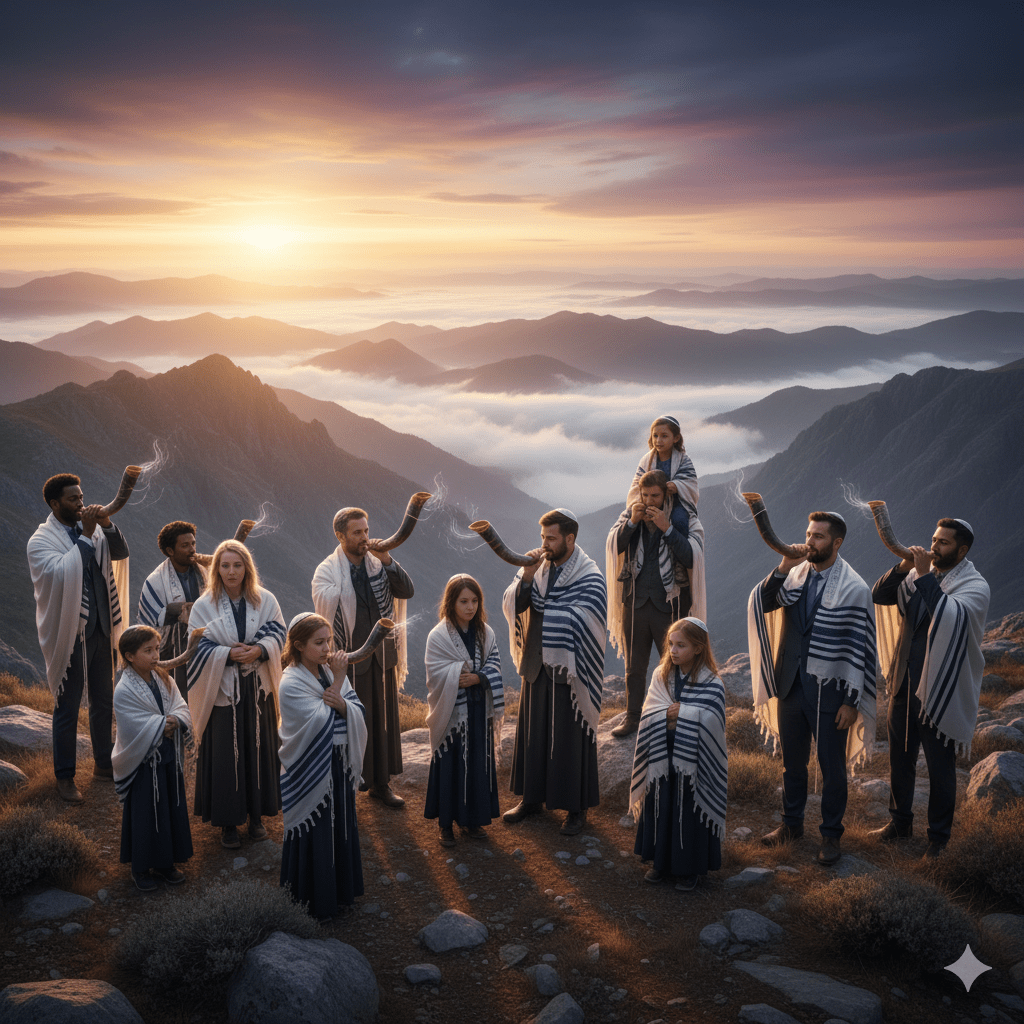
Yom Teruah (יוֹם תְּרוּעָה) literally means “Day of Shouting” or “Day of Blasts.” It’s mentioned in Leviticus 23:24 and Numbers 29:1 as a sacred day of rest and remembrance, marked by the shouts of joy, boldly proclaiming the Great Name of YHVH!
But here’s the thing: the Torah never calls it a new year or even a feast. It’s not a Chag or Feast like Unleavened Bread, Shavuot, and Sukkot.
There’s no mention of judgment, no apples and honey, no birthday of the world. It’s a day to make noise, pause, reflect and remember. It’s mysterious, yes—but it’s not a party hat holiday or resolution time.
—
🕰️ So Where Did “Rosh Hashanah” Come From?
The idea of Rosh Hashanah as the Jewish New Year comes from rabbinic tradition, not the Torah. Mishnah Rosh Hashanah 1:1 lists four “new years,” and one of them—Tishrei 1–a name Moses and King David never knew, the Biblical name for the month is the 7th Month. The Rabbis designated it as the new year for kings and calendars.
This tradition emerged during or after the Babylonian exile, when Jewish communities were exposed to Mesopotamian customs. The Babylonians celebrated their new year (Akitu) in the fall, during the seventh month of their calendar. Sound familiar?
Over time, Jewish sages adopted and adapted this timing, layering it with theological meaning. The Sages took a concept foreign to the Word of Truth and an imaginary greatness. It is now considered the birth of creation, a time of judgment, repentance. Beautiful ideas, yes—but not rooted in the plain text of Torah.
—
🗓️ What Does the Torah Say About the New Year?
Exodus 12:2 is crystal clear:
> “This month shall be for you the beginning of months; it shall be the first month of the year for you.”
That’s referring to Aviv a state of barley (later called Nisan), the springtime month when Israel left Egypt. Biblically, the year begins with redemption, not reflection. It starts with movement, not mourning.
So from a Karaite standpoint, the seventh month (Tishrei) is just that—the seventh. Not the first. Yom Teruah is a holy day, yes, but it’s not the head of the year. And meaning doesn’t have to artificially created to give significants to the day we really know very little about.
The 1st Day of the 7th Months is important to GOD so that should be enough reason for it to be important to us.
—
🚫 “Do Not Worship Me Like the Nations”
Here’s where things get deeper.
In Deuteronomy 12:30-31, God warns Israel:
> “Do not inquire about their gods, saying, ‘How do these nations serve their gods? I will do the same.’ You shall not worship the LORD your God in that way…”
This is a powerful principle. God doesn’t want us to be blending His ways with the customs of surrounding nations. He wants distinctiveness. Holiness. Set-apartness. The Nations should be say
So when we take a Babylonian-style new year and overlay it onto Yom Teruah, we risk doing exactly what He warned against: serving Him in the way the nations serve their gods.
—
🧠 Why This Matters
This isn’t just a calendar debate. It’s about how we approach God.
Do we follow His instructions, even when they’re sparse or mysterious? Or do we fill in the blanks with traditions that feel good but may lead us astray?
Yom Teruah invites us into sacred ambiguity. It’s a day of noise, of alertness, of spiritual wake-up calls. It’s not a new year—it’s a shout blasting in the seventh inning. We shout to God with joy, enthusiasm, reverence and awe! We shout praises to the Most High! We shout His Holy Name YEHOVAH! And maybe that’s exactly what we need.
—
🕊️ Final Thoughts
From a Karaite perspective, returning to the plain meaning of Scripture is an act of love and loyalty. It’s not about rejecting tradition for the sake of rebellion—it’s about honoring God’s voice above all others.
So this Yom Teruah, let’s listen for the sound of the shofar. Not as a birthday candle, but as a call to remember, to repent, and to realign.
Because sometimes, the loudest truth is the one that’s been buried under centuries of quiet assumptions.
—
Ok! This is The final Final Thought
One more thing God has called Israel to be a light in darkness so the nations see God living among us and join Israel.
D’varim (Deu) 4:5-10 CJB
(Moses is talking) Look, I have taught you laws and rulings, just as Adonai my God ordered me, so that you can behave accordingly in the land where you are going in order to take possession of it. Therefore, observe them; and follow them; for then all peoples will see you as having wisdom and understanding.
When they hear of all these laws, they will say, ‘This great nation is surely a wise and understanding people.’ For what great nation is there that has God as close to them as Adonai our God is, whenever we call on him? What great nation is there that has laws and rulings as just as this entire Torah which I am setting before you today?
Only be careful, and watch yourselves diligently as long as you live, so that you won’t forget what you saw with your own eyes, so that these things won’t vanish from your hearts. Rather, make them known to your children and grandchildren — [10] the day you stood before Adonai your God at Horev, when Adonai said to me, ‘Gather the people to me, and I will make them hear my very words, so that they will learn to hold me in awe as long as they live on earth, and so that they will teach their children.’
By Kyle Jones
Beitoftruth.org

 Torah Road